
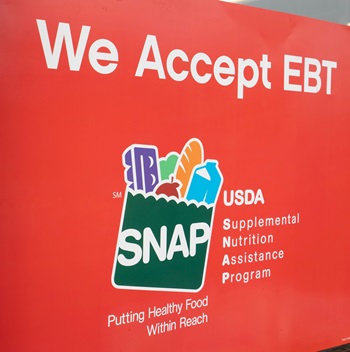

<div><p paraid="1162657796" paraeid="{ffc9f605-46b8-47f7-b12e-5b6f59baa093}{194}" style="text-align:center;"><em>USDA confirmed SNAP recipients will be able to use their unspent EBT card October balances in November. States have the option to fund SNAP for November using their own resources, while several states have committed to funding the WIC program if the shutdown continues. </em></p><p paraid="1162657796" paraeid="{ffc9f605-46b8-47f7-b12e-5b6f59baa093}{194}">By Elizabeth Tansing, Vice President, State Government Relations, FMI </p></div><div><img src="https://www.fmi.org/images/default-source/blog-images/snap-acceptance-signage.tmb-large-350-.jpeg?Culture=en&sfvrsn=b503f5b7_1" style="margin-bottom:10px;float:right;margin-left:10px;" class="-align-right" alt="Red sign with SNAP logo that says We Accept EBT" sf-size="100" /><p paraid="610033849" paraeid="{876596ae-563b-40be-9be0-5454ef6a66fa}{7}">As the federal government shutdown stretches on, concerns are mounting over the future of Supplemental Nutrition Assistance Program (SNAP) benefits for November. The U.S. Department of Agriculture (USDA) has indicated that current funding levels may be insufficient to provide full benefits next month unless Congress acts swiftly to pass a continuing resolution. </p></div><div><p paraid="1483408784" paraeid="{876596ae-563b-40be-9be0-5454ef6a66fa}{9}">USDA has confirmed that SNAP recipients with unspent or “rollover” funds from October will still be able to access and use those benefits in November. That clarification offers a measure of reassurance for the millions of American families who depend on SNAP to put food on the table each month. </p></div><div><p paraid="667016397" paraeid="{876596ae-563b-40be-9be0-5454ef6a66fa}{11}">While FMI members serve as facilitators of SNAP rather than funders, they are often the public face of anti-hunger efforts and remain deeply engaged in supporting their communities. FMI and its members have <a href="https://www.fmi.org/newsroom/latest-news/view/2025/10/21/fmi-urges-congress-to-reopen-government-to-ensure-snap-funding" rel="noreferrer noopener">urged</a> Congress to end the shutdown immediately, stressing that it is imperative for America’s most vulnerable households to continue accessing the food they need. </p></div><div><p paraid="1798447265" paraeid="{876596ae-563b-40be-9be0-5454ef6a66fa}{13}">Adding to the legislative focus this week, Senator Josh Hawley (R-MO) introduced the “ <a href="https://www.congress.gov/bill/119th-congress/senate-bill/3024/text" target="_blank" rel="noreferrer noopener">Keep SNAP Funded Act,</a>” a bill designed to ensure SNAP benefits continue uninterrupted during government funding lapses. President Donald Trump announced his support for the proposal, saying he backs efforts to guarantee that no family goes hungry because of Washington gridlock. </p></div><div><p paraid="94462102" paraeid="{876596ae-563b-40be-9be0-5454ef6a66fa}{15}">In a notable move at the state level, Virginia Governor Glenn Youngkin (R) issued an <a href="https://www.fmi.org/docs/default-source/state-affairs/gy-eo54.pdf?sfvrsn=22ab70f8_1" rel="noreferrer noopener" target="_blank">executive order</a> directing state funds to cover SNAP benefits for November should the shutdown continue. While this step ensures continuity for Virginia families, other states - even those with strong “rainy day” reserves - may hesitate to follow suit given the uncertainty around whether the federal government would later reimburse those costs. USDA has confirmed that states have the option to fund SNAP using their own resources and that any decision regarding reimbursement would rest with Congress. </p></div><div><p paraid="1231316654" paraeid="{876596ae-563b-40be-9be0-5454ef6a66fa}{17}">At the same time, some states have announced plans to either step in and fund the Women, Infants, and Children (WIC) program for November if the shutdown continues, or they have enough funding already available. For example, California, Illinois, New York, North Dakota, Tennessee, Virginia and Wisconsin have all said they will keep WIC benefits flowing to families in November. Other states, such as Iowa, say they have funding until mid-November. FMI expects to hear more from other states on this front. </p></div><div><p paraid="1044427886" paraeid="{876596ae-563b-40be-9be0-5454ef6a66fa}{19}">As policymakers debate next steps, the stakes remain high. Every day without a resolution brings new uncertainty for low-income families, retailers and communities across the nation. Ensuring the stability of SNAP and WIC isn’t just about preventing hunger – it’s about protecting the country’s most fundamental safety nets in times of crisis.</p></div>
[#item_full_content]